Golpark-Gariahat,Kolkata 700029
  pushpanjalieyecare@gmail.com


 9051155660
  All cashless facilities and West Bengal health scheme available.

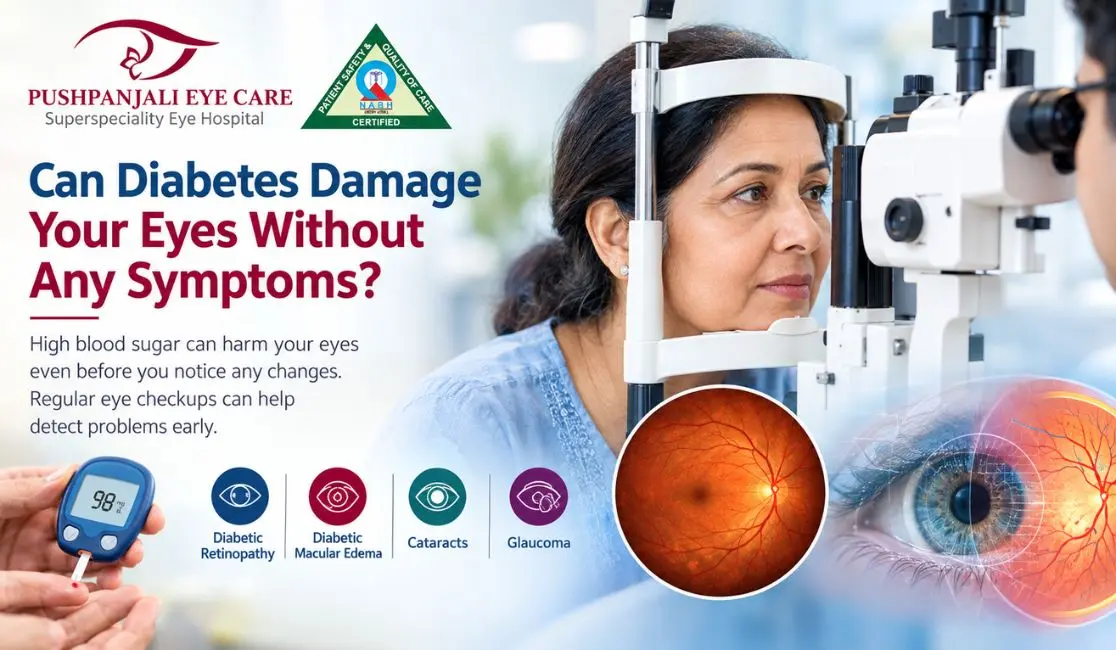
Can Diabetes Damage Your Eyes Without Any Symptoms
Are you living with high blood sugar and still do not visit for an eye checkup once a year? For people living with diabetes, regular eye checkups are essential. Diabetes can damage your vision without making any noticeable symptoms. Over time, high blood sugar can damage the tiny blood vessels that supply the retina, the light-sensitive tissue at the back of the eye.
Some diabetes-related eye conditions may progress before vision becomes blurry. That’s why regular eye checkups with an experienced eye doctor in Kolkata can detect eye problems before they threaten your vision. Specialized diabetic eye care and retinal evaluation can help identify and assess diabetes-related changes in your eyes.
In this blog, we will discuss whether diabetes can damage your eyes without any symptoms.
How Does Diabetes Affect Your Eyes?
Your eyes rely on a network of tiny blood vessels to supply the retina with oxygen and nutrients. When blood glucose stays high for a long time, these delicate vessels can be damaged. When blood vessels weaken, they may leak fluid or become blocked. In some cases, the retina may respond by developing abnormal new blood vessels that are fragile and prone to bleeding. These changes can gradually affect vision, and you may experience a sudden change in your eyesight.
Which Eye Problems Can Develop Secretly Due to Diabetes?
Diabetes can affect different parts of the eyes. Knowing the common conditions can help you understand why routine eye checkups are essential.
1. Diabetic retinopathy
Diabetic retinopathy is one of the major eye complications that is associated with diabetes. It occurs when high blood sugar damages the retina’s small blood vessels. In the early stage, diabetic retinopathy shows no major symptoms.
As the condition worsens, damaged vessels can leak, and abnormal blood vessels may develop. Major symptoms include blurred vision, dark spots, and sudden changes in eyesight.
2. Diabetic macular edema
The macula is the retina’s central part, and it is responsible for detailed vision. Diabetes can cause fluid to leak into the macula and lead to swelling known as diabetic macular edema. This condition may develop alongside diabetic retinopathy and affect central vision.
You might experience blurred vision, and straight lines appear distorted. If you experience this diabetes-related issue, you should consult an eye specialist for optical coherence tomography (OCT) to examine the retinal layers.
3. Cataracts problems
A cataract may develop when the eye’s natural lens becomes cloudy. It is common with ageing for people who are living with diabetes. You may notice cloudy vision, glare around lights, difficulty seeing at night and frequent changes in your eyeglass prescription. These symptoms are serious signs of a major cataract problem, and you need a professional eye examination and trusted cataract surgery in Kolkata to remove the cataract permanently.
4. Glaucoma
Glaucoma can damage the optic nerve, which carries visual information from the eye to the brain. Many forms of glaucoma develop gradually, and it does not show any noticeable symptoms until major damage has occurred.
Diabetes is associated with a risk of glaucoma. That’s why a comprehensive eye exam can help assess your risk and determine whether you need further evaluation.
Conclusion
If you have diabetes, early detection can protect your vision. Early treatment can help prevent serious vision loss. At Pushpanjali Eye Care Hospital, patients with diabetes can receive top-notch medical and surgical treatment for retinal diseases. Our experienced ophthalmology team and advanced diagnostic facilities provide specialized retinal care.