Golpark-Gariahat,Kolkata 700029
  pushpanjalieyecare@gmail.com


 9051155660
  All cashless facilities and West Bengal health scheme available.

Why You Should Share Your Family Medical History with Your Eye Doctor
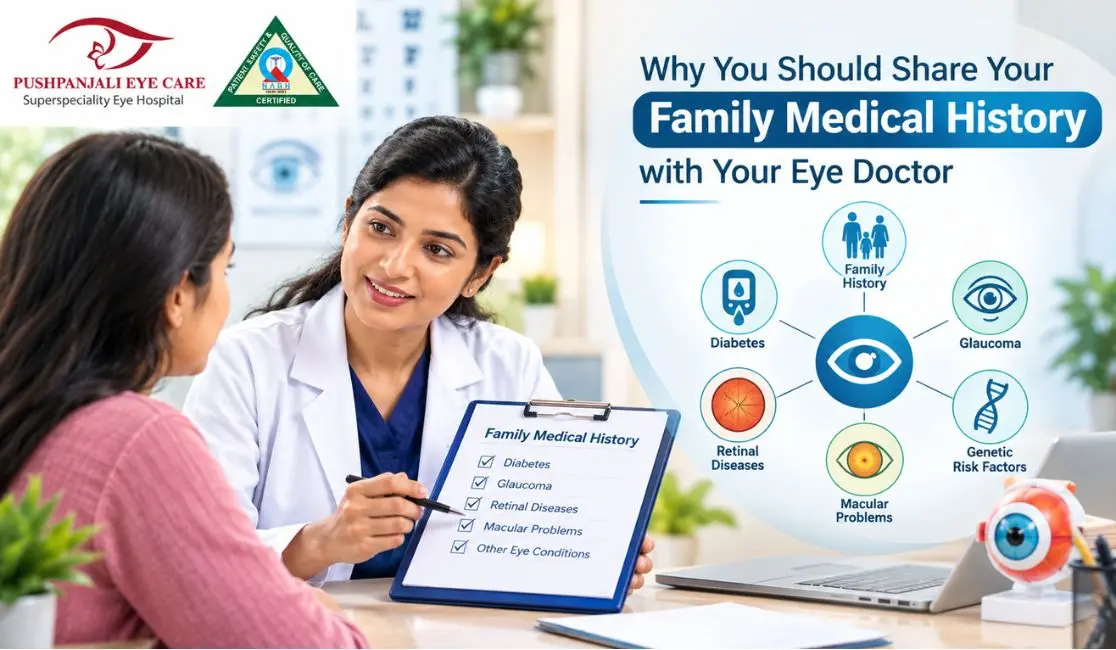
Your family’s medical history might be able to speak volumes about you even before your eyes do. Diabetes, glaucoma, and retinal diseases can sometimes have hereditary roots. By telling this history to a retina specialist in Kolkata, you will allow your eye doctor to learn about you better and treat your eye ailments accordingly.
While your eyes might feel completely healthy, some eye problems can come on very gradually without you even realizing there is a problem. Learning about the state of your own health as well as the eye conditions of any of your close family members can assist your physician in determining potential risk factors as well as what areas of an eye exam need to be focused on.
Various Reasons You Should Share Your Family Medical History with Your Eye Doctor
The medical background of your family can also provide helpful information about the status of your eyes. This is because some eye diseases and other health issues can be hereditary in nature; thus, it will be helpful to disclose this information to your eye specialist.
• Family history can reveal eye health risks.
Information related to your family’s medical history can be very helpful for your ophthalmologist. Various medical conditions like glaucoma, cataracts, retina-related problems, and certain forms of visual impairment might run in your family. Your physician needs to be aware of this information when performing eye examinations.
• Tell your doctor about retinal conditions.
Some retinal conditions could be hereditary at times. If you have any such retinal problems in your family, it is important to inform your ophthalmologist about it. At an eye hospital in Kolkata, such information will be helpful in understanding the retinal health status of your family.
• Share details about diabetes.
It is possible for diabetes to damage the tiny blood vessels of the retina, which could result in diabetic retinopathy. If you have a history of diabetes in the family, it is important that you mention this to the doctor during your visit to the eye clinic.
• Update your medical history regularly.
Your family’s medical history may vary due to the emergence of new diseases among your relatives. You should try to keep your data updated for visits to the eye doctor. In case you visit an ophthalmologist in Kolkata, it will be useful for you.
• Discuss any history of macular problems.
The macula is a tiny area of the retina involved in the visual acuity of our eyes. Macular disorders can sometimes be genetically predisposed. Mention your family history of macular issues related to aging or genetics when you undergo your eye check-up.
• Keep track of your parents’ eye health.
Your parents can give relevant information regarding any illnesses that may be genetic in nature. They can reveal if they have had any surgeries done to their eyes or any other problems like glaucoma, cataracts, or retinal diseases.
• Do not ignore early family health patterns.
You might be unsure of the name of the eye disease your relative had. This is all right. Give any information that you have, like how old your relative was at the onset and whether any medical attention was sought. The doctor will determine which information is important.
Conclusion
The sharing of the medical history of your family provides your eye doctor with a better perspective regarding the risks involved. Even the smallest bit of information concerning any eye ailments that run in your family is helpful.