Prime Eyesight Hospital Near Me Golpark-Gariahat,Kolkata 700029

|

Prime Eyesight Hospital Near Me Baguihati, Vip Road, Kolkata 700059

Best Eye Care Kolkata West Bengal All cashless facilities and West Bengal health scheme available. Top Eye Hospital In Kolkata
Best Eye Care Kolkata

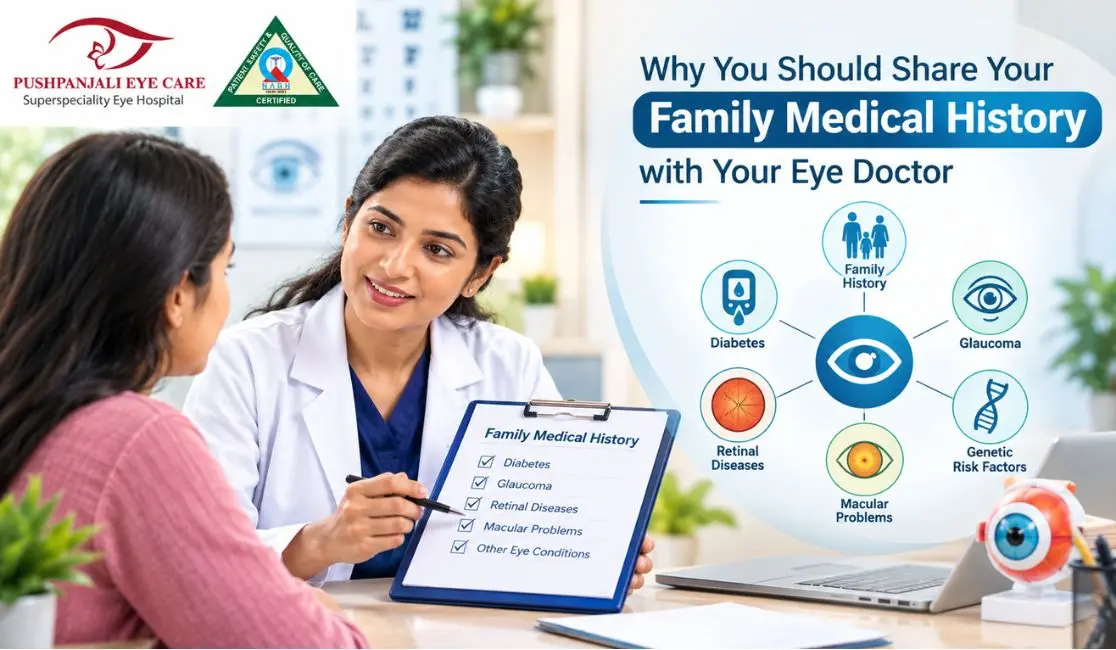
Why You Should Share Your Family Medical History with Your Eye Doctor

Your family’s medical history might be able to speak volumes about you even before your eyes do. Diabetes, glaucoma, and retinal diseases can sometimes have hereditary roots. By telling this history to a retina specialist in Kolkata, you will allow your eye doctor to learn about you better and treat your eye ailments accordingly.

While your eyes might feel completely healthy, some eye problems can come on very gradually without you even realizing there is a problem. Learning about the state of your own health as well as the eye conditions of any of your close family members can assist your physician in determining potential risk factors as well as what areas of an eye exam need to be focused on.

Various Reasons You Should Share Your Family Medical History with Your Eye Doctor

The medical background of your family can also provide helpful information about the status of your eyes. This is because some eye diseases and other health issues can be hereditary in nature; thus, it will be helpful to disclose this information to your eye specialist.

• Family history can reveal eye health risks.

Information related to your family’s medical history can be very helpful for your ophthalmologist. Various medical conditions like glaucoma, cataracts, retina-related problems, and certain forms of visual impairment might run in your family. Your physician needs to be aware of this information when performing eye examinations.

• Tell your doctor about retinal conditions.

Some retinal conditions could be hereditary at times. If you have any such retinal problems in your family, it is important to inform your ophthalmologist about it. At an eye hospital in Kolkata, such information will be helpful in understanding the retinal health status of your family.

• Share details about diabetes.

It is possible for diabetes to damage the tiny blood vessels of the retina, which could result in diabetic retinopathy. If you have a history of diabetes in the family, it is important that you mention this to the doctor during your visit to the eye clinic.

• Update your medical history regularly.

Your family’s medical history may vary due to the emergence of new diseases among your relatives. You should try to keep your data updated for visits to the eye doctor. In case you visit an ophthalmologist in Kolkata, it will be useful for you.

• Discuss any history of macular problems.

The macula is a tiny area of the retina involved in the visual acuity of our eyes. Macular disorders can sometimes be genetically predisposed. Mention your family history of macular issues related to aging or genetics when you undergo your eye check-up.

• Keep track of your parents’ eye health.

Your parents can give relevant information regarding any illnesses that may be genetic in nature. They can reveal if they have had any surgeries done to their eyes or any other problems like glaucoma, cataracts, or retinal diseases.

• Do not ignore early family health patterns.

You might be unsure of the name of the eye disease your relative had. This is all right. Give any information that you have, like how old your relative was at the onset and whether any medical attention was sought. The doctor will determine which information is important.

Conclusion

The sharing of the medical history of your family provides your eye doctor with a better perspective regarding the risks involved. Even the smallest bit of information concerning any eye ailments that run in your family is helpful.

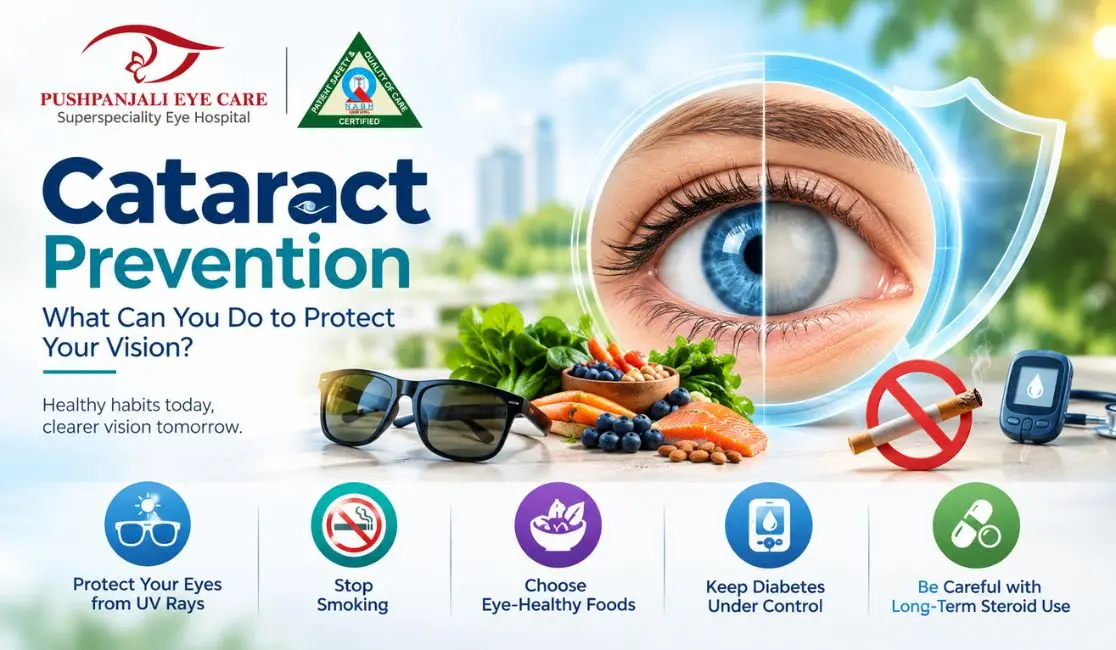
Cataract Prevention: What Can You Do to Protect Your Vision?

Clear vision is a dream for everyone and a sign of a healthy lifestyle. However, sudden eye problems can significantly affect your lifestyle. If you have trouble driving at night or notice faded colors, it may indicate a significant eye-related problem. Sometimes these are the early signs of cataract development. A cataract mainly occurs when the eye’s natural lens gradually becomes cloudy and affects the way light reaches the retina.

Among the variety of factors, aging is one of the most common causes of cataracts. Apart from aging, prolonged sun exposure, smoking, diabetes, previous eye injury, and certain medications also increase the risk of cataracts. Indeed, you cannot completely prevent cataracts; however, with the most efficient cataract surgery in Kolkata, you can safeguard your eye health and improve vision.

Now let’s explore this blog to ascertain how to prevent cataracts and what you can do to protect your vision.

Why Does the Eye’s Lens Become Cloudy?

Your natural eye lens acts as a clear window. Its job is to help focus light onto the retina so that you can see clearly. With age, proteins within the lens can gradually break down and clump together. This can make the lens cloudy and lead to cataracts. When cataracts progress, you may notice some visible changes in your eye health, such as-

• Blunt vision

• Difficulty seeing at night

• Eye sensitivity to bright light

• Glare or halos around headlights

• Color appearing faded

• Double vision in many cases

• Changes in glasses prescription

These symptoms do not mean your eye contains cataracts. Other eye conditions can also affect cataracts, so an eye examination is important.

Can Cataracts Really Be Prevented?

There is no guaranteed way to prevent age-related cataracts. Some risk factors, such as aging and genetics, are out of your control in cases of cataract treatment. Effective LASIK eye surgery in Kolkata can protect your eyes from cataracts, but healthy habits and proper eye protection can also help protect your eye health. Let’s discuss some healthy habits which can safeguard your eyes from cataracts.

1. Protect your eyes from UV rays

Your eyes need adequate protection from scorching heat. Long-term exposure to ultraviolet radiation can increase the risk of cataracts. However, sunglasses can block 99-100% of UV rays, protecting your eyes from harmful UV exposure. For daily protection, choose sunglasses with reliable UV protection, and try to wear them when you are outdoors.

2. Stop smoking

Smoking not only affects your lungs and heart but also affects your eyes. If you smoke, it can drastically increase the risk of cataracts. Quitting smoking is a reliable option to safeguard your eye health from cataracts. Try to change your smoking habit to enhance a healthy lifestyle.

3. Give your plate some eye-friendly variety

No single food can prevent cataracts. However, a balanced, nutrient-rich diet can support your eye health and safeguard your vision. Dark leafy green vegetables and omega-3 fatty acids can be eye-friendly additions to your diet. Adding more colorful vegetables to your diet can benefit your eyes.

4. Keep diabetes under control

Your overall eye health is closely connected with diabetes. Diabetes is a critical risk factor for cataracts. If you have diabetes, try to work closely with healthcare professionals to manage glucose levels, which can affect cataracts.

5. Be careful with long-term steroid use

Certain steroid medications are closely associated with cataract risk. This does not mean you should stop consuming prescribed medicine on your own. If you use steroid medication for a long period, speak with your eye specialist at the best eye hospital in Kolkata about your cataract-related eye risk.

Conclusion

Cataract surgery mainly involves removing the cloudy natural lens and replacing it with an artificial lens. However, it is not the only way to prevent cataracts. You can reduce your risk of cataracts by maintaining a healthy lifestyle. At Pushpanjali Eye Care, you can experience the most advanced diagnostics and trusted cataract surgery. Contact us through our website to book an appointment.

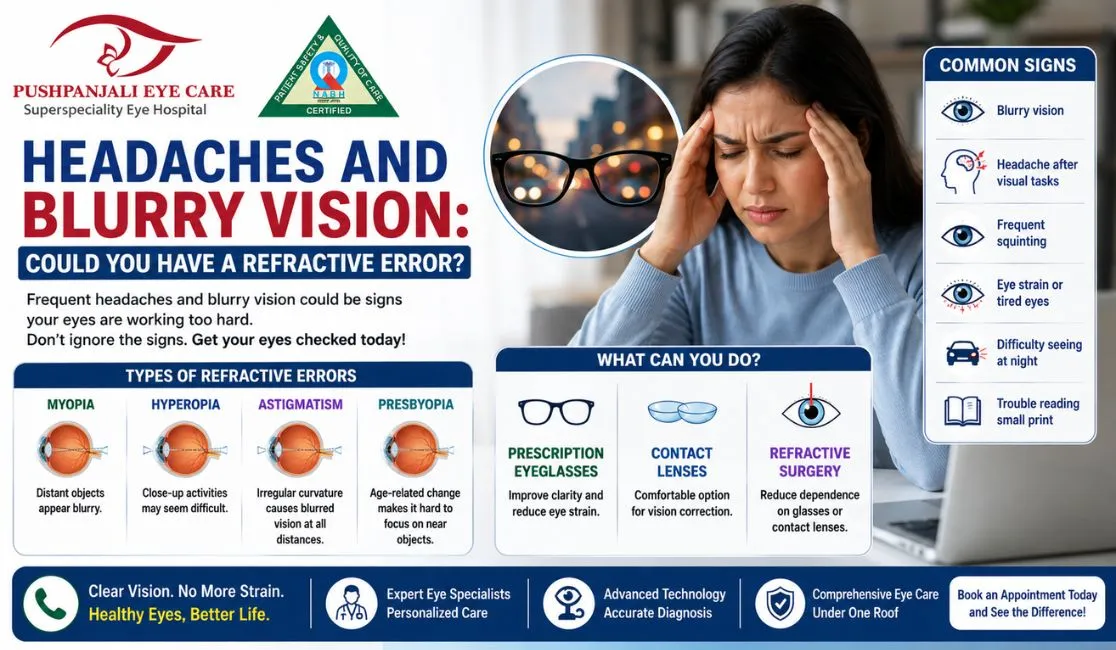
Headaches and Blurry Vision: Could You Have a Refractive Error?

Have you ever experienced frequent headaches after reading or spending long periods on screens? You may also notice that words sometimes look blurry; you may not see objects clearly, or you may find yourself squinting for clear vision. You may think all of these symptoms happen due to stress, lack of sleep, or too much screen time. However, frequent headaches and blurry vision sometimes appear together, and your eyes may be trying to tell you something.

Among all possible reasons, refractive error can be a possible factor for vision-related discomfort. Refractive errors are among the most common vision problems that affect children, young adults, and other people. However, the good news is that refractive error can be identified through a detailed eye check-up with the support of the best eye hospital in Kolkata, which can support you with the right vision correction.

In this blog, we will discuss how refractive error affects you and how headaches and blurry vision indicate a severe eye problem.

What Is a Refractive Error?

A refractive error occurs when the eye does not focus light properly on the retina. It can happen because of differences in the shape or length of the eye. When the light does not focus correctly, it results in blurred or distorted vision. Let’s discuss common types of refractive errors in detail-

  1. Myopia- Distant objects can appear blurry, while nearby objects are easily visible.
  2. Hyperopia– Close-up activities such as reading a book may seem difficult.
  3. Astigmatism- Irregular curvature of the cornea can cause blurred vision at different distances.
  4. Presbyopia– This age-related change makes it difficult to focus on nearby objects; basically, it happens during reading

Vision changes may seem minor at first, but giving extra effort to see simple things can sometimes contribute to eye strain and headaches.

Signs You Should Pay Attention to for Refractive Error

Not every headache resembles refractive errors. However, there are certain patterns that you should notice. At such moments, a thorough eye examination can help you identify the problem associated with refractive error.

Blurry vision

Objects may look unclear, hazy, or out of focus at a distance or close up.

Headache after visual tasks

If headaches tend to appear after reading, studying, or using screens, visual strain can become a critical problem. Sometimes frequent headaches resemble cataracts, and you must have a clear idea about cataract surgery cost in Kolkata to get the best treatment.

Frequent squinting

Do you find yourself narrowing your eyes to read a sign, recognize a face, or see something clearly? Squinting can sometimes be a sign that your vision needs correction.

Eye strain or tired eyes

Your eyes may feel tired and uncomfortable after prolonged visual screen time.

Difficulty seeing at nights

Some people with refractive errors may find nighttime vision more challenging, particularly while dealing with light or bright headlights.

Having trouble reading small print

If you have trouble reading small print, it may indicate presbyopia or other vision-related issues.

What Can You Do If You Have a Refractive Error?

Suppose you are experiencing vision-related discomfort and searching Google for a good eye specialist near you. In that case, you can expect a professional, expert solution based on your refractive error and overall eye health.

Prescription eyeglasses

Properly prescribed glasses are effective in improving clarity and reducing visual effects.

Contact lenses

Some people prefer contact lenses for lifestyle or cosmetic purposes. An experienced and highly skilled eye specialist can determine whether you are suitable for contact lenses.

Refractive surgery

Eligible people who want to reduce their dependence on glasses or contact lenses can consider refractive procedures such as LASIK. An experienced ophthalmologist can evaluate your eyes and discuss the potential benefits and limitations before recommending any surgical procedure.

Conclusion

Taking care of your eyes in case of any discomfort must be a serious task. If headache and blurry vision have become a regular part of your day, try to visit an experienced eye specialist to get expert advice. At Pushpanjali Eye Care Hospital, you can access dedicated eye care services, including refractive error management. Our experienced ophthalmology professionals focus on personalized care and appropriate diagnostic treatment based on your vision health.

Why Protective Eyewear is Essential for Eye Health and Safety

The eyes are a marvel, perceiving all that surrounds us. But we usually don’t consider how much protection they need. Your eyes face the harshness of sun rays, the screens of various gadgets, and dust daily. You should visit the best retina specialist in Kolkata to check for any possible issues in their early stages. Nevertheless, there is no substitute for prevention. Look after your eyes from now on.

It is important that you wear protective eye gear as this will be an effective way to shield your eyes from potential dangers. Whether you are engaged in activities that expose you to hazards at your place of work, have been spending much time in front of electronic screens, or engaging in outdoor activities, you should ensure that your eyes are well protected.

Various Reasons Protective Eyewear is Essential for Eye Health and Safety

Our eyes are vulnerable to hazards such as dust, dirt, and damage from excessive exposure to light and digital screens. Using eye protection can avoid these dangers and preserve eye health.

Prevents physical injuries

Safety glasses play a very vital role in ensuring that your eyes remain protected. They serve to keep out any form of hazardous dust and particles, as well as any dangerous chemicals that might come into contact with your eyes. If you are in a construction zone or are undertaking any experiments in the laboratory, safety glasses are highly recommended for you. Not only do these ensure that there is a reduced likelihood of injury, but they also guarantee that no permanent damage is done to the eyes.

Supports long-term vision health

The consistent wearing of protective glasses helps avoid any form of cumulative injury in the eyes. Regular checkups with a good eye specialist near you can further help monitor eye health and catch any issues early.

Reduces digital eye strain

A lot of individuals have been facing challenges with eye strain, dryness, and headaches as a result of prolonged exposure to screens. Time spent staring at screens can lead to discomfort, which hinders both concentration and general well-being. With blue light blocking glasses, such a situation can be rectified since they will minimize the strain on one’s eyes. Blue light filter glasses will protect an individual from the harmful blue light emanating from computers and other electronic gadgets.

Encourages professional eye care awareness

This approach of combining prevention techniques with expert guidance is critical. Regular visits to the best eye hospital in Kolkata for eye checkups ensures good eye health and emphasizes the need for protective measures.

Essential for workplace safety compliance

It is necessary for most companies to have safety policies which require their employees to put on eye protection equipment. The observance of these policies is very important as it will ensure that there is compliance with legal requirements and that potential hazards that could lead to severe injuries are avoided. Eye protection equipment will safeguard workers from dangers like splashes, radiation, and foreign objects.

Conclusion

It is important to protect your eyes from harmful elements in order to ensure good eye health. Protective glasses prevent exposure to ultraviolet rays and help keep the eyes safe from dust and computer stress. If you develop the practice of wearing protective glasses and remain cautious about potential hazards, you will be able to avoid future damage.

Macular Degeneration: Key Warning Signs Everyone Should Know

Macular degeneration is one of the primary causes of vision loss worldwide, especially among individuals over the age of 50. It affects the macula, the central part of the retina responsible for sharp, detailed vision. What makes this condition particularly concerning is that it often develops silently in its early stages, making awareness of warning signs absolutely crucial.

Therefore, understanding these signs can help you seek timely treatment from a renowned retina specialist in Kolkata and preserve your eyesight. In this blog, we will find out the key warning signs, underlying causes, risk factors, and effective preventive measures to help you protect your vision and take proactive steps toward long-term eye health.

The Basics of Macular Degeneration

Macular degeneration, commonly known as Age-Related Macular Degeneration (AMD), is a progressive eye condition that harms central vision while leaving peripheral vision mostly unaffected. There are two major categories of AMD.

  • Dry AMD: More common and progresses slowly
  • Wet AMD: Less common but more severe and rapid

While macular degeneration doesn’t cause complete blindness, it can significantly affect daily activities like reading, driving, and recognizing faces.

Why Early Detection Matters

One of the biggest challenges with macular degeneration is that early stages often show no noticeable symptoms. By the time vision changes become obvious, the disease may already have progressed. Therefore, early diagnosis can slow down vision loss and, in some cases, even improve vision with proper treatment.

Key Warning Signs You Should Never Ignore

Recognizing early signs of macular degeneration can make a life-changing difference. So, here are the most important warning signs you should never ignore:

Blurred or Reduced Central Vision

One of the most common symptoms of macular degeneration is a gradual loss of central vision. Reading small text or focusing on details may become difficult for someone facing this problem.

Distorted or Wavy Lines

Straight lines, such as door frames or text lines, may appear bent or wavy. This visual distortion is a hallmark sign, especially in wet AMD.

Dark or Empty Spots in Vision

Another very prominent sign of macular degeneration is dark or empty spots in vision. You may notice a dark, blurry, or empty area in the center of your vision, which can grow larger over time and interfere with daily tasks.

Difficulty Seeing in Low Light

Struggling to adjust in dim environments, such as restaurants or theaters, is another early symptom of macular degeneration that deserves immediate attention.

Colors Appear Faded or Less Vibrant

Have you noticed colors appearing less vibrant than before? Remember, macular degeneration can significantly impact color perception, making hues look dull, faded, or washed out.

Trouble Recognizing Faces

Major trouble recognizing faces is another very significant sign of macular degeneration. As central vision deteriorates, recognizing familiar faces becomes increasingly difficult, impacting social interactions.

Increased Need for Bright Light

An often-overlooked early sign of macular degeneration is heightened sensitivity to lighting. You may find yourself needing stronger lighting for reading or performing close-up tasks.

Who Is at Higher Risk?

Certain factors can boost your chances of developing macular degeneration:

  • Age above 50
  • Family history or genetics
  • Smoking
  • Obesity and poor diet
  • Cardiovascular diseases

Recognising these risks can help you take preventive measures early.

When Should You See a Doctor?

You should consult an ophthalmologist in Kolkata immediately if you notice:

  • Sudden changes in central vision
  • Distorted or wavy lines
  • Blind spots or difficulty seeing details

Remember, early intervention is critical, as treatments are more effective in slowing progression during the initial stages.

Macular Degeneration Prevention Tips to Protect Your Vision

While macular degeneration cannot always be prevented, certain lifestyle choices can reduce your risk. Therefore, focus on the factors mentioned below.

  • Eat a healthy diet rich in leafy greens and antioxidants
  • Quit smoking
  • Maintain a healthy weight
  • Get regular eye checkups
  • Protect your eyes from UV exposure

The Conclusion

Macular degeneration may begin quietly, but its impact can be life-altering if ignored. The key to protecting your vision lies in early awareness, timely diagnosis, and consistent eye care. Recognizing subtle changes and acting quickly can slow progression and preserve your quality of life. So, don’t wait for symptoms to worsen and prioritize your eye health today. Trust Pushpanjali Eye Care, the best eye hospital in Kolkata, for expert diagnosis, advanced treatments, and compassionate care. Book your eye check-up now and take the first step toward clearer, healthier vision for years to come.

Essential Symptoms of Eye Conditions That Are Often Missed

Our eyes are not just for seeing the world around us; they are important organs that may alert us to any problem before we feel any discomfort. Many eye problems occur over time with small changes that may not be noticeable at first. For example, a blurry vision, dryness, and sensitivity to light may not mean much at first, but they may be symptoms of serious problems with our vision. It is important to recognize these symptoms and take steps to protect our eye health, or you can go to the best eye specialist in Kolkata to treat the issue.

Noticing early symptoms is important for protecting your eyesight. Being aware of the changes in vision and minor discomforts can help you take the necessary precautions before the conditions worsen. Being aware of these often-missed changes can help you protect your eyes and enjoy clear and healthy vision for a very long time.

Various Essential Symptoms of Eye Conditions That Are Often Missed

Some eye problems begin as minor issues, and people may experience blurry vision, dryness, and sensitivity to light. Identifying these early signs will help prevent serious problems.

Blurry or distorted vision

Sometimes, blurry vision and distorted vision may indicate eye problems such as cataracts, glaucoma, and macular degeneration. These signs may not occur every time, but they are significant and should not be ignored. Each of these conditions can worsen your vision over time, so it’s crucial to pay attention to any changes, even if they are occasional. If you have glaucoma, instead of wasting time, you need to visit the best Glaucoma Specialist in Kolkata.

Sensitivity to light

If you feel extra sensitive to sunlight or artificial light, it could be a sign of health problems. These include conditions such as uveitis, which is the inflammation of the eye, corneal problems related to the clear front part of the eye, or the beginning of cataracts, in which the lens becomes cloudy. Such sensitivity may cause discomfort and make it difficult to perform these activities. It is always important to consult a doctor from the best eye clinic in Kolkata.

Double Vision

Experiencing double vision from time to time may be a result of problems with eye muscles and nerves. It can also imply serious neurological conditions affecting your vision. This happens when your eyes can’t move together, causing images to overlap. If you notice this concerning problem, it’s a good idea to see a healthcare professional. They can help find the cause and discuss possible treatment options.

Difficulty seeing at night

If you experience difficulties in viewing things clearly while driving at night or in poorly lit areas, it could be an indication of eye health problems. This could be an indication of the development of cataracts, vitamin A deficiencies, and other eye health issues. The aforementioned eye health issues related to visibility are not only challenging but could be an indication of the development of an eye health issue. It is, therefore, essential to seek eye health exams to determine the cause of the aforementioned eye health issues.

Headaches related to vision

Headaches could be related to vision issues. This discomfort may be due to eye strain, which happens when the eyes get tired from focusing too hard or not having the right vision correction. It’s important to check if uncorrected vision issues are causing these headaches, so seeing an eye doctor can help identify and fix the problem.

Conclusion

There are many eye problems that start with small signs that people do not take seriously. It is very important to take eye exams seriously in order to protect our eyes from major health problems.

How Aging Affects Your Vision: The Truth About Eye Clarity

Time impacts our skin and changes how we see things. Bright colors can fade, details may become unclear, and lights at night might look different. Aging is not a sudden change; it happens slowly over time. We might not notice until we have to hold a favorite book farther away or take longer to read distant signs. Our eyes, like the rest of our bodies, change as we get older. They adjust and sometimes face challenges as they try to keep up with their lives. Another common eye issue in old age is cataracts. If you are also facing this issue, then cataract surgery in Kolkata will be perfect for you.

According to India’s National Blindness and Visual Impairment Survey 2015-2019, cataracts accounted for 66.2% of blindness, 80.7% of severe visual impairment, and 70.2% of moderate visual impairment among people aged 50 and older. According to the Longitudinal Ageing Study in India (LASI), 2020, cataracts affect about 23.2% of India’s 138 million people aged 60 and older (Source). These statistics show that vision is actually directly related to old age.

Aging affects our vision in many ways, but it’s important to understand these changes. Our eye lenses become stiffer, our pupils react differently to light, and the eye’s structures can weaken over time. By understanding these changes, we can take care of our eyes and adopt good habits to keep our vision clear for as long as possible. Although aging is inevitable, we can still influence how we experience our vision.

Various Ways Aging Actually Affects Your Vision

As we age, our eyes change, colors may appear duller, details blur, and night driving may become more difficult. Recognizing these changes is the first step to protecting your vision and maintaining clarity.

Presbyopia

As people get older, the lens in their eyes becomes less flexible. This makes it harder to focus on close-up details, such as small print in books or labels on jars. Because of this vision change, many people need reading glasses when they’re in their 40s or 50s. Before things take a bad turn, it’s better to seek help from the best eye doctor in Kolkata and get the best treatment.

Dry eyes

As people get older, they often produce fewer tears. This can cause dry, itchy, or irritated eyes. When there isn’t enough moisture, it can lead to discomfort and, in some cases, blurry vision. The lack of lubrication can make everyday tasks, like reading or using a computer, more difficult.

Cataracts

With time, the lens in your eye may become cloudy, leading to different kinds of eye-related problems. You may see things that are hazy, leading to poor visibility during the day as well as at night. The clouding of the lens may cause discomforting glare from light, which may not be very helpful in your day-to-day activities. In order to improve your visibility, cataract surgery at the best eye hospital in Kolkata may prove to be an effective solution.

Macular degeneration

This is the degeneration of the macula, which is the central part of the retina of the eye. This makes it difficult to see things, read, and even recognize people’s faces. In order to identify this problem at the right time and deal with it accordingly, eye tests are of great importance.

Slower visual recovery

When people are exposed to bright lights, it takes them a longer time to adjust as they grow older. This slows down the recovery of the eyes.

Conclusion

We all go through the process of aging, and this is a natural process that we cannot escape. The same is the case with our eyes, as we go through the process of aging with respect to our eyes as well. Some of these changes in vision include difficulties in focusing on things up close, problems with night vision, and sensitivity to bright lights. By understanding these changes, we are in a better position to take care of our eye health. This way, people can enjoy the beauty of things around us, regardless of their age. Their eyes change as we age, but we can enjoy the beauty of things around us vividly.